Galileo explains how his telescope works.
Showing posts with label astronomy. Show all posts
Showing posts with label astronomy. Show all posts
Monday, February 16, 2009


Thursday, February 12, 2009
International Year of Astronomy and Galileo birthday celebration
The year 2009 represents the 400th anniversary since Galileo Galilei first aimed the then new telescope toward the heavens and discovered craters on the moon, the satellites of Jupiter, phases of Venus and even Uranus and Neptune. The UN has declared 2009 to be the International Year of Astronomy ["IYA"].
Astronomers at the University of Denver's historic Chamberlin Observatory are planning an IYA and Galileo birthday party on Sunday February 15th, 2009 starting at 2pm, to celebrate his contributions to astronomy. Celebrities, on hand to explain the importance will be:
Astronomers at the University of Denver's historic Chamberlin Observatory are planning an IYA and Galileo birthday party on Sunday February 15th, 2009 starting at 2pm, to celebrate his contributions to astronomy. Celebrities, on hand to explain the importance will be:
- Jack Eastman, Galileo look-alike, along with Dr. Bob Stencel (DU Professor of Astronomy)
- Tim and Cathie Havens (S&S Optika, Littleton telescope store, presenting new product information)
- Tom Bisque (Software Bisque, Golden), who will demonstrate the latest in SKY software, and,
- Members of the Denver Astronomical Society will also be present to help answer your questions about telescopes.
Tuesday, January 6, 2009
Death by Black Hole
This is a great video of Neil DeGrasse Tyson.
Reminds me of another book from Dr. Philip Plait -- Death From the Skies!
Reminds me of another book from Dr. Philip Plait -- Death From the Skies!
Thursday, December 4, 2008
Hubble Image Advent Calendar
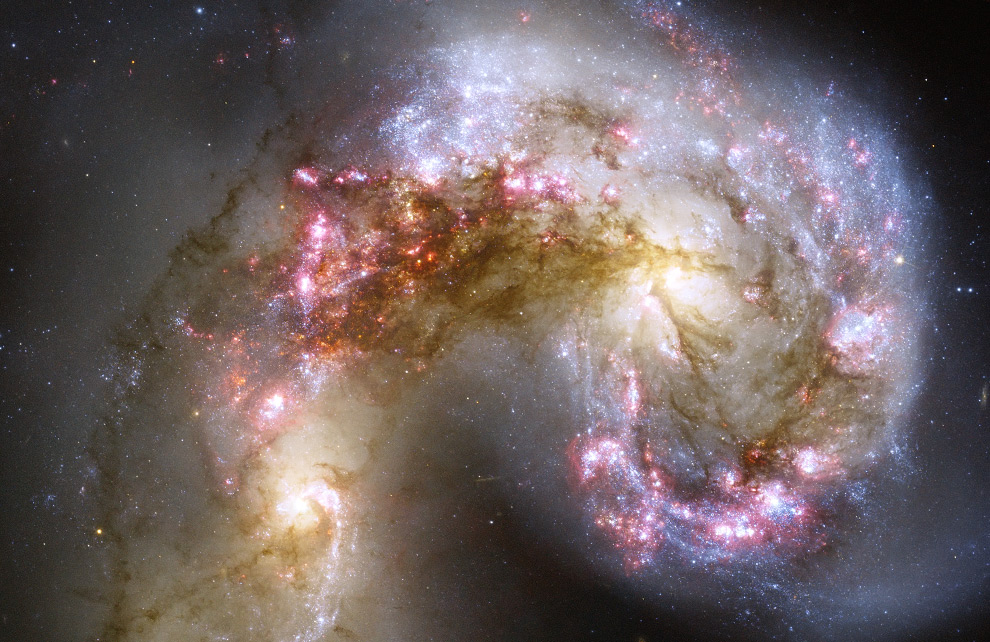
This is a really cool Hubble astronomical image advent calendar. Thanks to Charles Early at NASA Goddard for finding this.
Thursday, October 16, 2008
Great World Wide Star Count
Schoolchildren, families, and citizen scientists around the world will gaze skyward after dark from October 20 to November 3, looking for specific constellations and then sharing their observations through the Internet. The Great World Wide Star Count, now in its second year, helps scientists map light pollution globally while educating participants about the stars.
The event, which is free and open to everyone who wants to participate, is organized by the Windows to the Universe project at the University Corporation for Atmospheric Research (UCAR), in conjunction with planetariums and scientific societies across the country and abroad. Funding is provided by the National Science Foundation.
"The star count brings families together to enjoy the night sky and become involved in science," says Dennis Ward of UCAR's Office of Education and Outreach. "It also raises awareness about the impact of artificial lighting on our ability to see the stars."
The 2007 star count drew 6,624 observations taken on all seven continents, and organizers expect the number of participants to double this year. UCAR used last year's observations to generate maps of star visibility across the United States and around the world. The results show a strong correlation between development and a lack of night sky visibility. Next year, the star count will be included in a cornerstone project of the 2009 International Year of Astronomy, a global effort initiated by the International Astronomical Union and the U.N. Educational, Scientific, and Cultural Organization to promote interest in astronomy.
-----How the count works-----
Participants in the Northern Hemisphere will look for the constellation Cygnus, while those in the Southern Hemisphere will look for Sagittarius. They will then match their observations with
magnitude charts downloaded from the Great World Wide Star Count Web site (see below). The site contains instructions for finding the constellations and other event details, and it links to background about astronomy on the Windows to the Universe Web site.
Participants may make observations outside their homes or go to less developed areas where more stars are visible. Those in overcast areas who cannot see stars will be able to input data about cloud conditions instead.
Bright outdoor lighting at night is a growing problem for astronomical observing programs around the world. By searching for the same constellations in their respective hemispheres, participants in the Great World Wide Star Count will be able to compare their observations with what others see, giving them a sense of how star visibility varies from place to place. The observers will also learn more about the economic and geographic factors that control light pollution in their communities and around the world.
"Last year's results showed a strong correlation between dense development, where there is a lot of light, and a lack of star visibility," Ward says. "Without even being aware of it, many of us have lost the ability to see many stars at night. Part of our goal is getting people to look up and regain an appreciation of the night sky."
The event, which is free and open to everyone who wants to participate, is organized by the Windows to the Universe project at the University Corporation for Atmospheric Research (UCAR), in conjunction with planetariums and scientific societies across the country and abroad. Funding is provided by the National Science Foundation.
"The star count brings families together to enjoy the night sky and become involved in science," says Dennis Ward of UCAR's Office of Education and Outreach. "It also raises awareness about the impact of artificial lighting on our ability to see the stars."
The 2007 star count drew 6,624 observations taken on all seven continents, and organizers expect the number of participants to double this year. UCAR used last year's observations to generate maps of star visibility across the United States and around the world. The results show a strong correlation between development and a lack of night sky visibility. Next year, the star count will be included in a cornerstone project of the 2009 International Year of Astronomy, a global effort initiated by the International Astronomical Union and the U.N. Educational, Scientific, and Cultural Organization to promote interest in astronomy.
-----How the count works-----
Participants in the Northern Hemisphere will look for the constellation Cygnus, while those in the Southern Hemisphere will look for Sagittarius. They will then match their observations with
magnitude charts downloaded from the Great World Wide Star Count Web site (see below). The site contains instructions for finding the constellations and other event details, and it links to background about astronomy on the Windows to the Universe Web site.
Participants may make observations outside their homes or go to less developed areas where more stars are visible. Those in overcast areas who cannot see stars will be able to input data about cloud conditions instead.
Bright outdoor lighting at night is a growing problem for astronomical observing programs around the world. By searching for the same constellations in their respective hemispheres, participants in the Great World Wide Star Count will be able to compare their observations with what others see, giving them a sense of how star visibility varies from place to place. The observers will also learn more about the economic and geographic factors that control light pollution in their communities and around the world.
"Last year's results showed a strong correlation between dense development, where there is a lot of light, and a lack of star visibility," Ward says. "Without even being aware of it, many of us have lost the ability to see many stars at night. Part of our goal is getting people to look up and regain an appreciation of the night sky."
Tuesday, May 13, 2008
World Wide Telescope
This service was launched about an hour ago!
The World Wide Telescope is a "single rich application portal that blends terabytes of images, information, and stories from multiple sources over the Internet into a seamless, immersive, rich media experience. Kids of all ages will feel empowered to explore and understand the universe with its simple and powerful user interface."
Looks cool, but you need some serious hardware and software -- here are the requirements...
- Microsoft® XP SP2 (minimum), Windows® Vista® (recommended)
- PC with Intel Core 2 Duo processor with 2 gigahertz (GHz) or faster, recommended
1 gigabyte (GB) of RAM; 2 GB RAM recommended - 3D accelerated card with 128 megabytes (MB) RAM; discrete graphics card with dedicated 256-MB VRAM recommended for higher performance
- 1 GB of available hard disk space; 10 GB recommended for off-line features and higher performance browsing
Thursday, March 6, 2008
Generation Y and NASA
This blog links to an interesting presentation given to NASA "bigwigs" trying to convince them that NASA needs to market to younger people in more relevant ways."A few months ago a few of us had a chance to participate on a 'strategic communications committee' at Johnson Space Center that was convened to discuss NASA’s strategic communications strategy released in ‘07. After a few meetings on the committee, we asked if we could share our perspective with the group on why we think an entire generation isn’t connecting to NASA."
Monday, October 29, 2007
Communicating Astronomy with the Public Journal
I received a notice that the IAU has a new online journal -- Communicating Astronomy with the Public Journal. As I was browsing through some of the new articles, I noticed that DU was mentioned in the article, "Astronomy in Second Life: A User’s Perspective" by Adrienne J. Gauthier. (See http://www.capjournal.org/issues/01/32_34.pdf.)
Tuesday, September 18, 2007
DU presence in Second Life
DU has been ramping up its presence in second life. The Physics and Astronomy Department plans to take advantage of the educational posibilities starting in 2008. See the recent articles in the July/August 2007 issue of Technology Review, Inside Higher Ed , and the Rocky Mountain news on Monday, September the 17th. Science Friday on NPR invites virtual observers and questions via SL at the DU Science School. I was able to ask a question that was nationally broadcast on September the 14th. Thanks to one of the DU Researchers, we now have a way for Second Lifers to contact the Penrose library with research questions. Just touch the sign (in the Olin Building of SL) to be redirected to the "Ask a Research Question" form.

Subscribe to:
Posts (Atom)


